India’s Wheat Export Story in 2025: From Ban to a Possible Reopening

Updated: Dec 17, 2025
For nearly three and a half years, India has maintained a ban on the export of wheat and wheat-based products such as atta, maida, and suji. The ban, originally imposed in May 2022 amid rising food prices and concerns about domestic supplies, aimed to protect consumers and ensure adequate availability of this staple grain within the country.
Now, with government granaries overflowing and record output in recent harvests, New Delhi is taking steps that could finally reverse this policy — a move that would reshape both domestic agricultural economics and global wheat markets.

Why the Change of Heart? Record Stocks and Low Inflation
In 2025, India’s wheat scenario has changed dramatically:

Government wheat stocks have surged well above buffer requirements — official estimates have the stockpile around 30–37 million tonnes, significantly higher than the required safety level.
This surplus has been driven by consecutive bumper harvests and supportive production conditions, with some estimates earlier in the year projecting record output north of 115 million tonnes for 2024-25.
At the same time, inflation has moderated sharply, with food inflation dipping to historically low levels — giving policymakers more confidence that limited exports won’t disrupt domestic price stability.
Thanks to these developments, the Food Ministry has formally proposed lifting the ban on wheat-product exports in 2025.
What’s on the Table: A Phased and Controlled Resumption
Rather than a full and unfettered removal of restrictions, India’s government appears to be considering a phased approach:
1. Initial Quota for Wheat Products
The Food Ministry has recommended allowing an initial export outflow of up to 1 million tonnes of wheat-based products, including flour and semolina — a move meant to test the waters before opening broader markets.
2. Focus on Processed Items
By prioritising value-added wheat items like flour and maida rather than raw grain alone, the policy aims to support domestic millers and tap into global demand without exposing basic food supply to risk.
3. Inter-Ministerial Coordination
Decisions on export policy involve multiple ministries — including consumer affairs, commerce, agriculture, and food processing — to balance food security with export opportunities.
Timeline: When Could Exports Resume?

While no date has been officially confirmed, several clues point to a 2026 decision window:
Late 2025 — The government’s proposal stage is already underway (Food Ministry’s recommendation submitted).
Early 2026 (March–April) — Historically, India has linked major wheat export policy reviews to the agricultural cycle around the post-harvest period (March–April) when new crop output becomes clear. Earlier government guidance suggested a decision could be expected around that time once supply and demand fundamentals are reassessed.
2026 Export Season — If policy approvals proceed on schedule, limited exports of wheat products could begin in mid-2026, with gradual scaling depending on market conditions and ongoing stock assessments.
In short: expect the first steps toward export resumption as early as Q2 2026, contingent on final approvals and domestic demand forecasts.
Balancing Act: Food Security vs. Export Opportunity
Despite optimism in parts of industry, policymakers remain cautious:
In 2025, some ministers reiterated the ban’s rationale, saying that domestic food security remains the top priority and any export policy will be calibrated against domestic needs.
Government decisions will likely continue to balance international demand — especially from traditional markets in the Middle East, Africa, and South Asia — with India’s need to guard against price spikes or supply shocks.
At its core, the debate is about making the most of agricultural productivity gains without jeopardising strategic food reserves, especially for vulnerable populations.
What it Means for India and the World
For Indian Farmers and Millers
A lifting of export restrictions could unlock new markets, boost income for processors, and add momentum to value-added agricultural industries that rely on exports.
For Global Wheat Supply
India’s return to the world wheat market — even initially through processed products — could ease tight global supplies and support importers in Africa, Asia, and the Gulf who have long relied on Indian wheat exports.
Conclusion: A New Chapter for India’s Wheat Policy
India’s proposal to lift its long-standing wheat-products export ban reflects a remarkable shift from scarcity concerns toward surplus management and international engagement. With food inflation under control and stocks at multi-year highs, policymakers are now considering a controlled reopening of exports, likely to begin in early to mid-2026.
The decision will not only impact farmers and millers in India, but also global commodity markets that have felt the effects of India’s absence. As the timeline unfolds, 2026 may well mark the year India steps back into the wheat export arena — cautiously, but confidently.
Looking Beyond Wheat: India’s Grocery Exports Remain Open
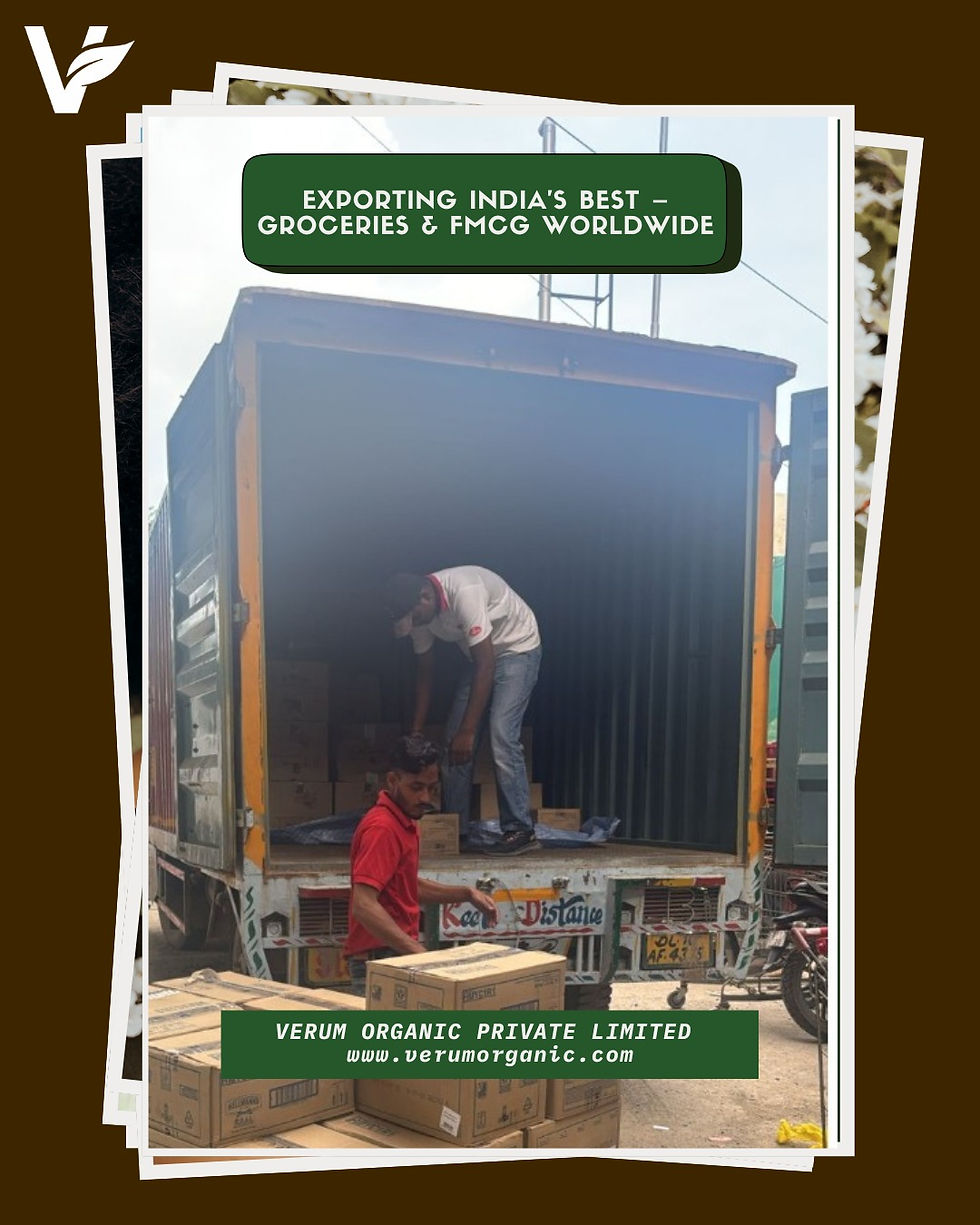
While the proposed easing of restrictions on wheat and wheat-based products is still under government review, it is important to note that India’s broader grocery and food export ecosystem remains fully operational.
Despite the current embargo on wheat products, a wide range of Indian food and grocery items continue to be exported globally, including:
Rice (Basmati & Non-Basmati)
Pulses & lentils
Spices & spice blends
Oilseeds & flours (non-wheat)
Ready-to-cook and processed foods
Organic and conventional grocery products
India remains one of the world’s most reliable sourcing destinations for high-quality, competitively priced food products — supported by strong agricultural output, established supply chains, and export-ready infrastructure.
About Verum Organic Private Limited
Verum Organic Private Limited is a leading Indian exporter of grocery and food products, serving international buyers across Europe, the Middle East, Africa, and Asia.
We specialize in:
Conventional & organic grocery exports
Bulk, private label, and white-label supply
Compliance-ready sourcing aligned with international food safety standards
End-to-end export support — from procurement to documentation and logistics
Whether you are looking to source existing export-approved food products today or planning ahead, Verum Organic is well-positioned to support your requirements. Contact us today!
Get in Touch:
For product catalogs, export inquiries, or partnership discussions:
Verum Organic Private Limited
📧 Email: verumorganic@gmail.com
📞 WhatsApp / Phone: +91 81787 34976


Comments